Vocational and Entrepreneurship Skills for Youth Economic Empowerment
Providing vocational training and entrepreneurship support to vulnerable youth in Kasese District, to enable them harness available labour market opportunities
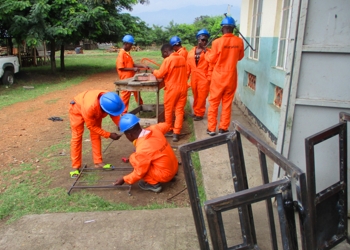
Increasing access to skills development opportunities for vulnerable youth and supporting self-employment initiatives.
Youth unemployment and limited
access to practical vocational skills remain major challenges in Uganda,
particularly among vulnerable youth in rural communities. Many young people,
especially school dropouts, young women, and unemployed youth, continue to face
poverty, dependency, and exclusion from meaningful economic opportunities due
to limited access to affordable and market-relevant skills training. In Kasese
District, these challenges are further worsened by low household incomes,
inadequate employment opportunities, and social stereotypes that discourage
women from engaging in technical trades. As a result, many vulnerable youth
remain trapped in unemployment, hopelessness, and risky livelihoods despite
their potential to contribute productively to society.
With support from Enabel through
the Skills Development Fund (SDF) Albertine Rwenzori, CODEA, in partnership
with Kasese Youth Polytechnic, implemented the Vocational and Entrepreneurship
Skills for Youth Economic Empowerment (VESYEE) Project to equip vulnerable
youth with practical skills in welding and metal fabrication, entrepreneurship,
life skills, and work-based learning. Beneficiaries were linked to financial
service providers, organized into business groups, and supported with start-up
kits to establish youth-led enterprises.
As a result, 92% of the
beneficiaries were certified by DIT, six youth-led businesses were established,
and dozens of vulnerable youth created self-employment opportunities and began
rebuilding their lives with dignity, income, and renewed hope. The project
further promoted gender inclusion, social rehabilitation, and equal
participation by supporting vulnerable young women, breastfeeding mothers, and
former drug users to access vocational training without discrimination.

